
Guide
Why Issaquah Garage Doors Let the Cold In
Issaquah homes built between 1962 and 2005 lose their bottom seals and side weatherstripping the same way, in the same cold-moderate climate band. Here's what actually fails and when.
Local detail
How Local Conditions Play In
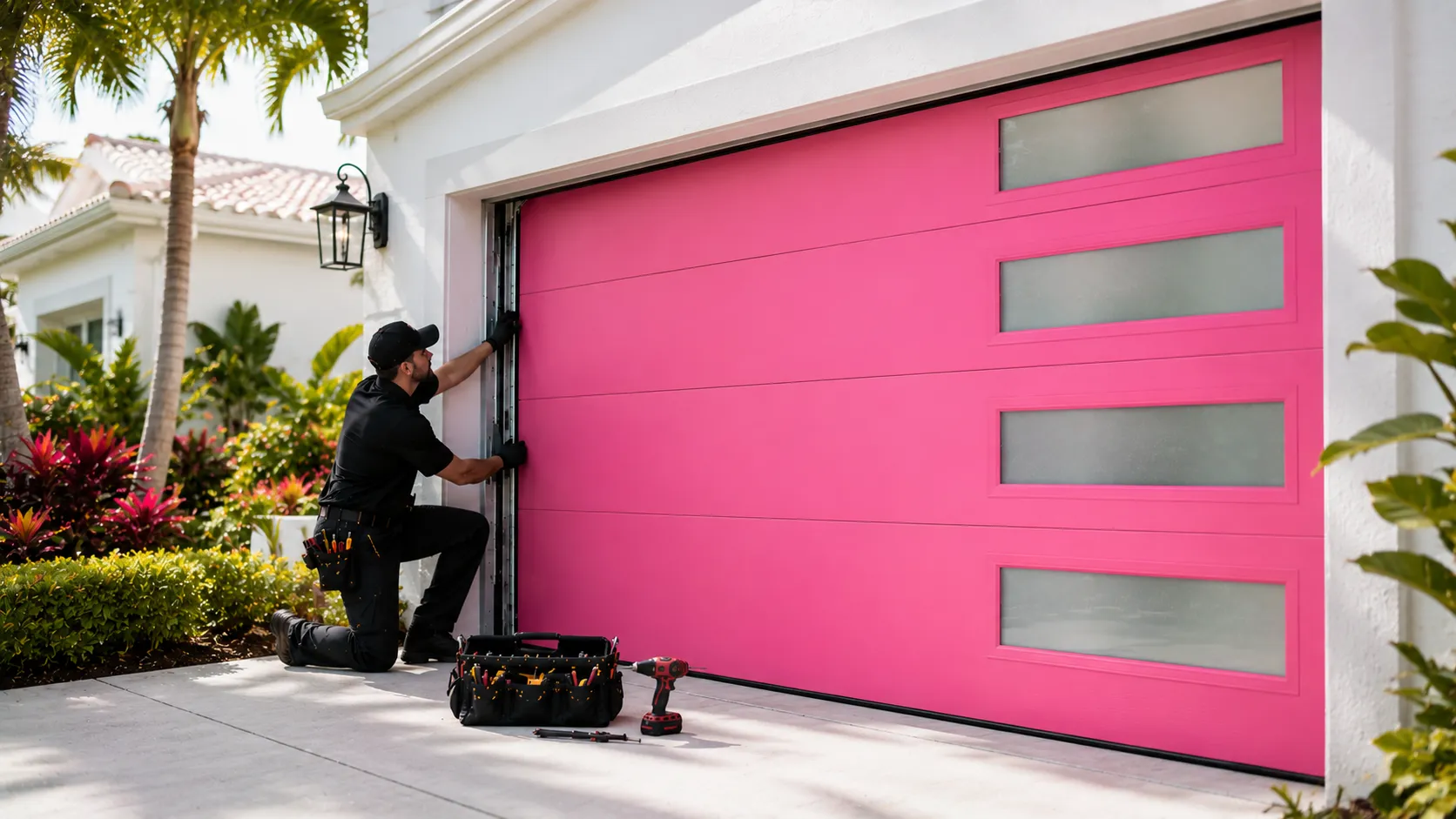
Most garage doors around Issaquah went up somewhere between 1962 and 2005, with the bulk of that stock dating to the 1980s and 90s. That matters for seals because the vinyl and rubber used on doors from that era wasn't built to last 30-plus years, and a lot of these garages are still running the weatherstripping the builder installed, or a cheap replacement from a decade back. The service area sits in a cold moderate climate band, which means the door isn't fighting deep freezes most winters, but it is cycling through repeated damp cold snaps, condensation, and temperature swings between night and day.
That cycling is what actually breaks down a seal - not one hard freeze, but hundreds of small expansions and contractions over years. On a door that old, the bottom astragal has usually flattened on one side, the vertical seals along the track have shrunk back from the frame, and you can often see daylight at the corners without getting on your knees to look.

The area
The Seasonal Bit
In a cold moderate band like this one, the worst seal failures show up in late fall and early winter, when temperatures drop enough to stiffen old vinyl but don't stay low enough to freeze the ground and stop things moving. That freeze-thaw-adjacent pattern is harder on seals than a steady deep freeze would be, because the door panel, the track, and the seal itself are all expanding and contracting at slightly different rates through the day.
A seal that looked fine in August can crack the first cold night of the year simply because it lost flexibility over the summer and nobody noticed until it got cold enough to matter. This isn't a once-a-decade event here - it's a normal part of the yearly cycle for houses in this bracket, and it's why a seal that seemed fine last winter can suddenly let a visible draught through this winter.
What we find
What to Check
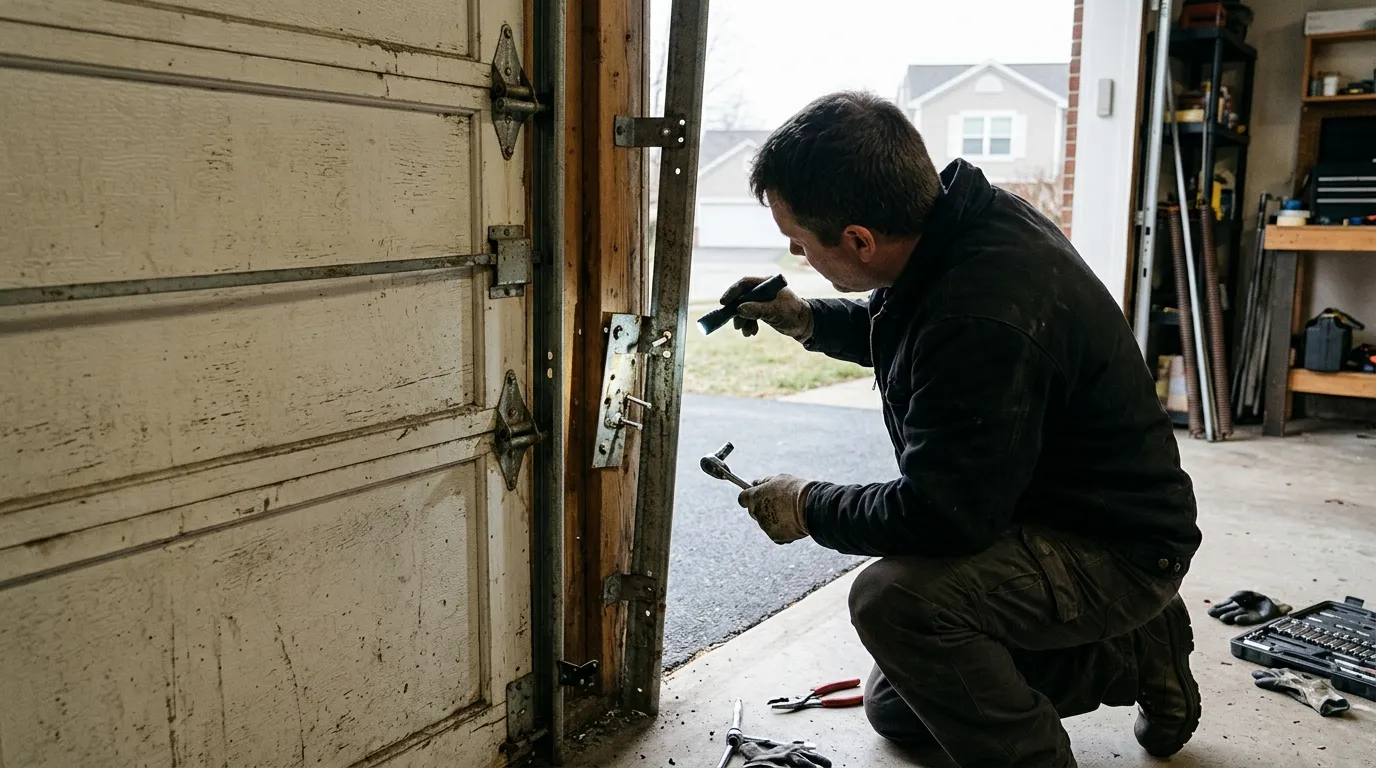
Start at the bottom astragal - the rubber strip along the floor. On doors from the 1962-2005 range, this is almost always the first thing to go, because it takes the most direct contact with the slab and with runoff. Press a hand along the full width with the door down; a slack, spongy spot on one end usually means it has already lost its seal even if it looks intact.
Next, check the vertical strips where the door meets the frame on both sides - shrinkage here shows as a visible gap you can see light through, especially near the top corners. Last, check the top seal where the panel meets the header, since builders on this era of house often used a thinner strip up top that goes brittle faster than the sides. If you feel cold air moving rather than just seeing a gap, that's active draught, not just wear, and it's worth fixing before it drives your heating bill up further.
How we work
What Is Going On
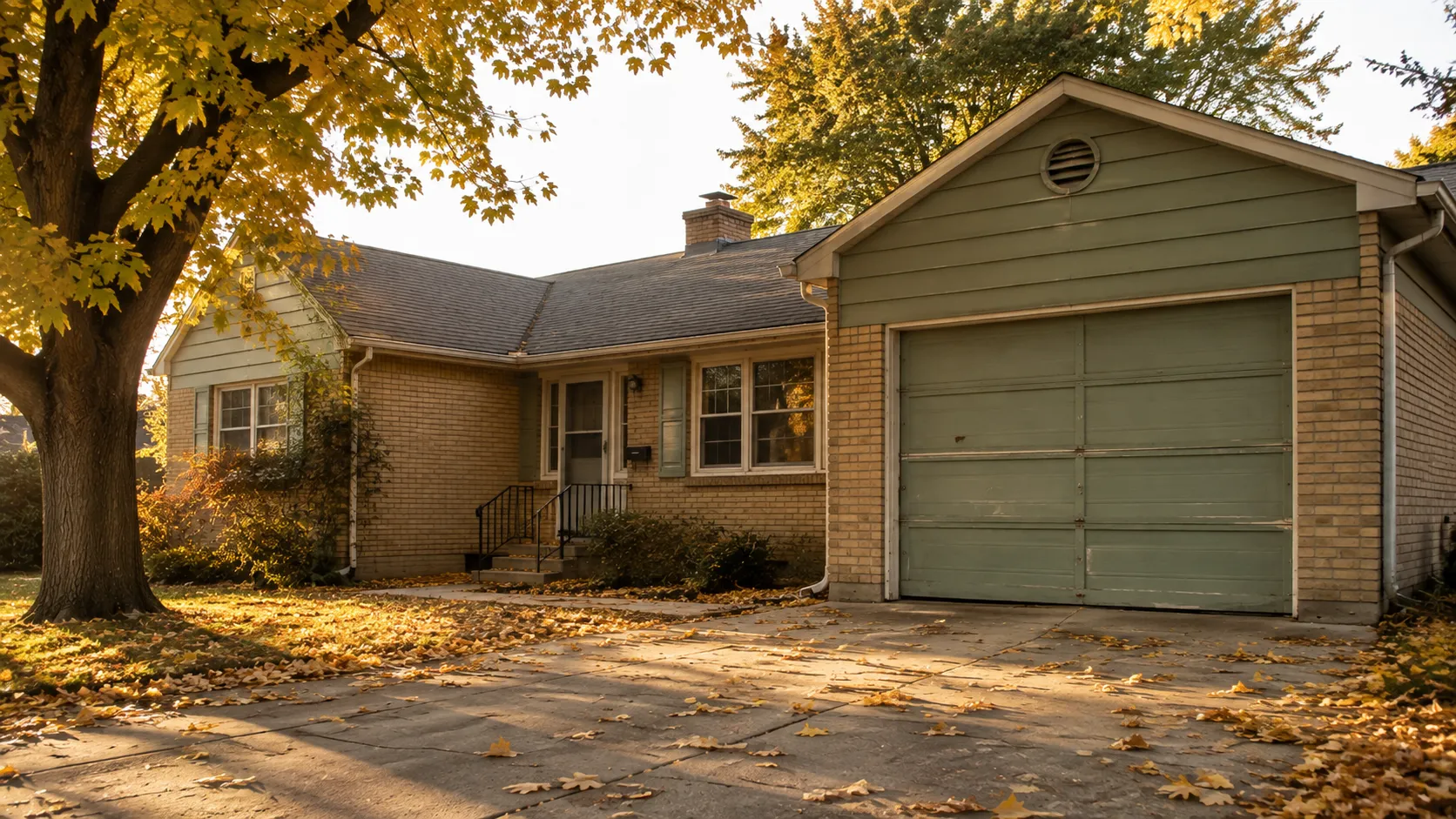
Put together, a garage from this era in a cold moderate climate is dealing with seals that were never rated for this many freeze-adjacent cycles, on a house old enough that the original weatherstripping has likely never been replaced. That's not a design flaw specific to any one builder - it's just what happens to 30-to-60-year-old rubber and vinyl in a climate that keeps working it without ever destroying it outright in one event.
The honest limitation here: seal replacement is a straightforward job, but it won't fix a door that's out of square or a frame that's shifted with the foundation, which is common enough in houses this old that we check for it before quoting a seal-only fix. If the gap is uneven top to bottom, that's a frame or track problem, not a seal problem, and swapping the rubber alone won't solve it.
Questions
Common questions
Why does my garage door only draught in winter?
Vinyl and rubber seals stiffen as temperatures drop, and on a door built in the 1962-2005 window that stiffening exposes wear that was already there but not letting air through in warmer months. The cold doesn't cause the failure - it reveals it.
How often should I replace garage door seals in this climate?
There's no fixed federal figure for this, so the honest answer is: check them every fall before the first cold snap, since our cold moderate climate band cycles seals harder than a steady climate would. If you see cracking or feel air movement, replace rather than wait.
Is a draughty door just a seal problem or something bigger?
Often it's just the seal, especially on 1980s-90s stock where original weatherstripping has simply worn out. But an uneven gap - wider at one corner than another - usually points to a frame or track issue that a new seal alone won't fix.
Ready when you are
Need a garage door sorted in Issaquah?
Issaquah Garage Door Pros repairs and installs garage doors, springs and openers in Issaquah, WA and the surrounding area.