
Guide
What Issaquah's Housing Stock Means for Your Garage Door
How Issaquah's 1962-2005 housing stock and cold, moderate climate affect garage door seals, springs, and openers across the area's 34 named neighborhoods.
Local detail
How Local Conditions Play In
Most of the garage doors we look at in this area sit on houses built between 1962 and 2005, with the median landing around 1983. That's a long stretch, and it matters because the door and opener technology changed a lot across those decades. A door installed in a house built in the early '60s in a spot like North Issaquah or Squak Mountain is going to have different hardware than one going up in Issaquah Highlands in the late '90s or early 2000s.
Across the 34 named areas we work in - from Gilman and Olde Town near the core out to Snoqualmie Ridge - the bulk of the stock is 1980s-90s construction. That's a specific window. Insulation standards for garages lagged behind the rest of the house for a long time, so even homes from that era often have a single-layer door or a door retrofitted later with foam board that doesn't seal the way a factory-insulated panel does. If your garage feels like an unheated shed in January, the door is usually why.
This isn't a guess about your specific street - it's a pattern that shows up across the housing stock here, and it's worth knowing before you decide whether to patch a door or replace it.
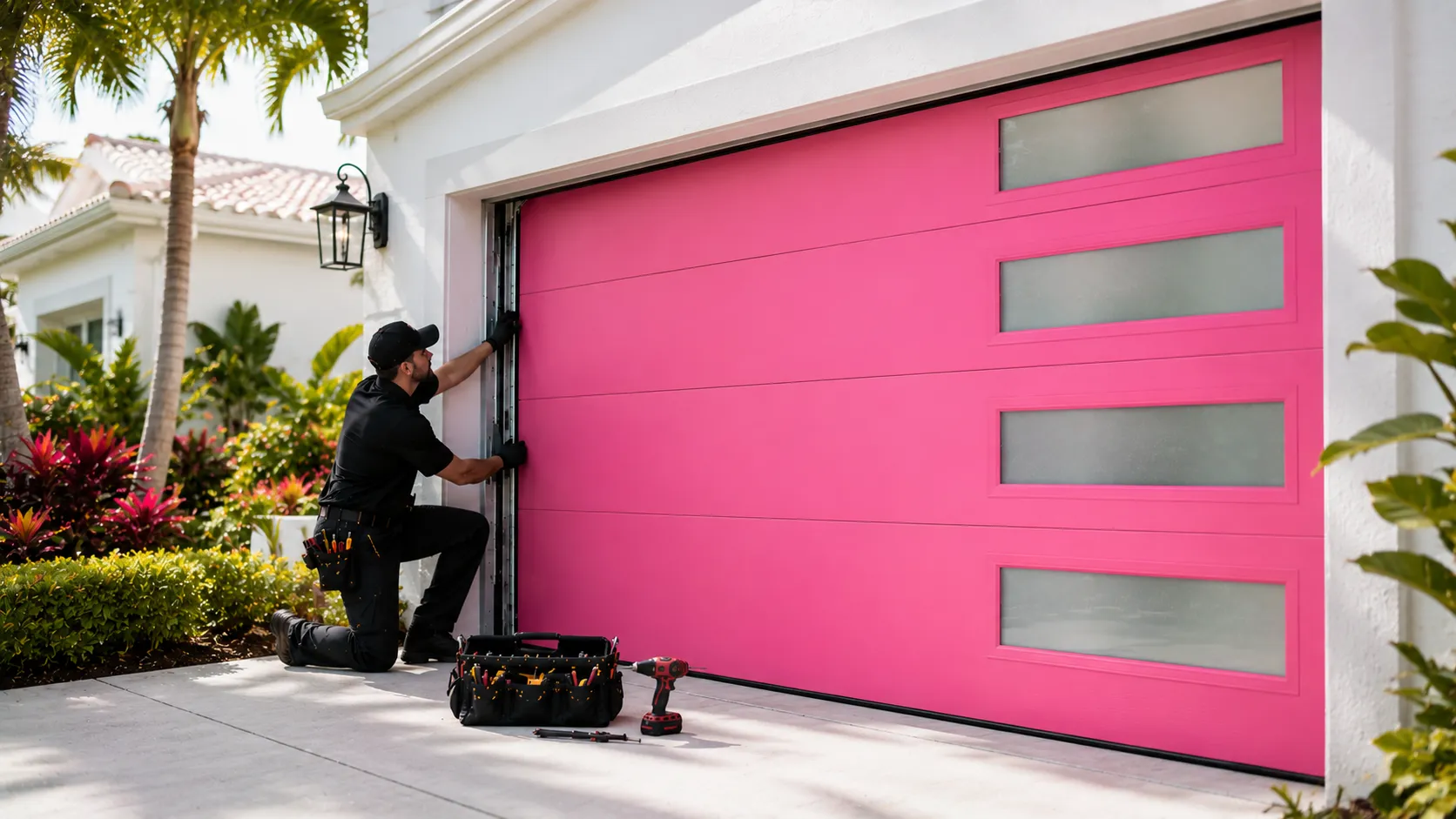
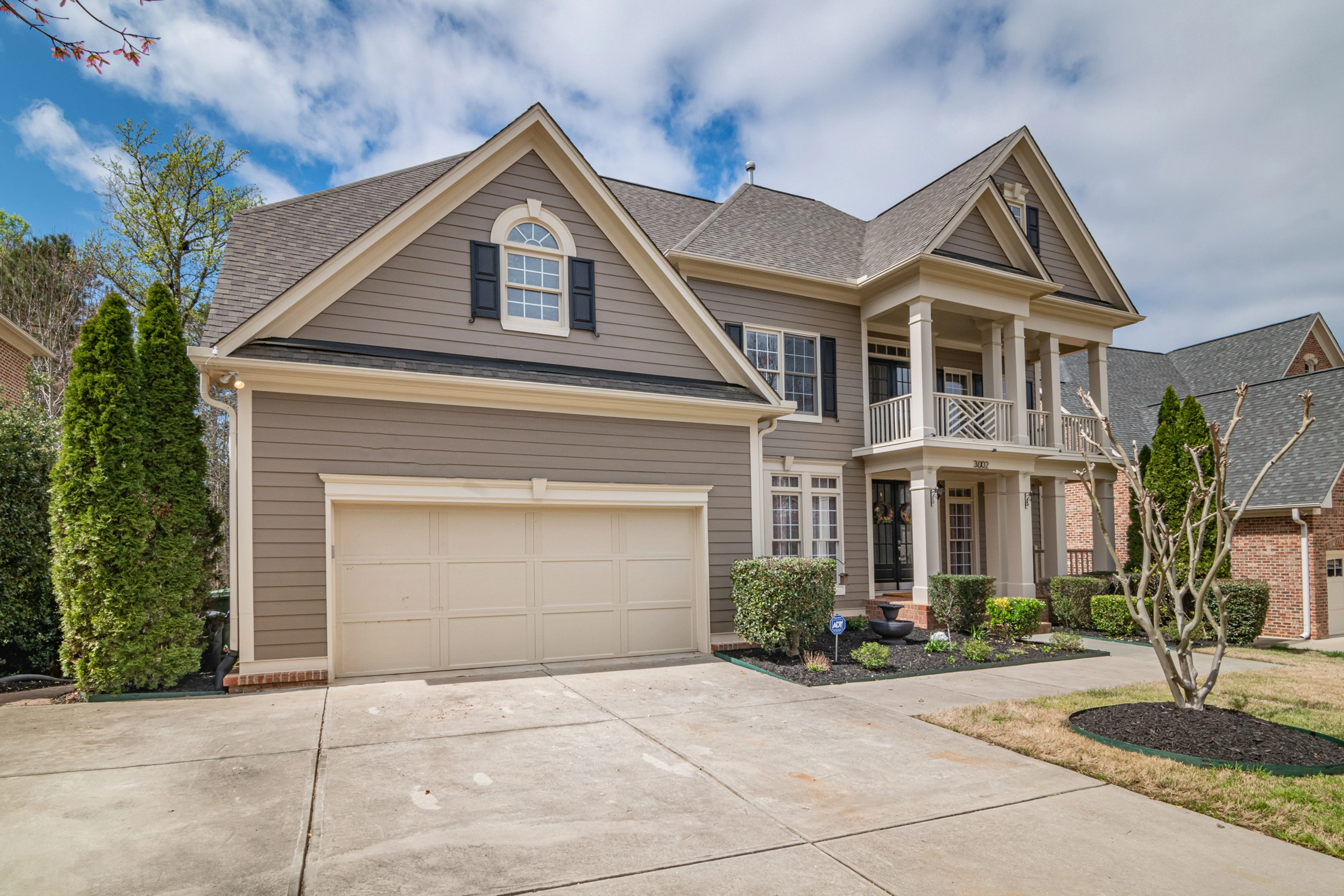
The area
The Seasonal Bit
We're in a cold, moderate climate band here, not the deep-freeze conditions you'd get further inland, but cold enough that temperature swings work on hardware year after year. Steel panels contract in the cold months and expand back in summer, and on an older door that cycling loosens hinge screws, works grease out of the rollers, and eventually shows up as a rattle or a door that hangs slightly off-track.
On houses from the 1962-2005 window, the torsion spring and cable setup was sized for the door as it shipped from the factory - not for the extra weight of a later insulation retrofit or a heavier replacement panel. Add cold-weather metal fatigue on top of that and a spring that's lasted fifteen years without complaint can go in a single cold snap.
We don't get hurricane-force weather events here, and I'm not going to pretend we do. What we get is steady, moderate cold that's harder on doors than people expect because it's not dramatic enough to notice until something snaps.
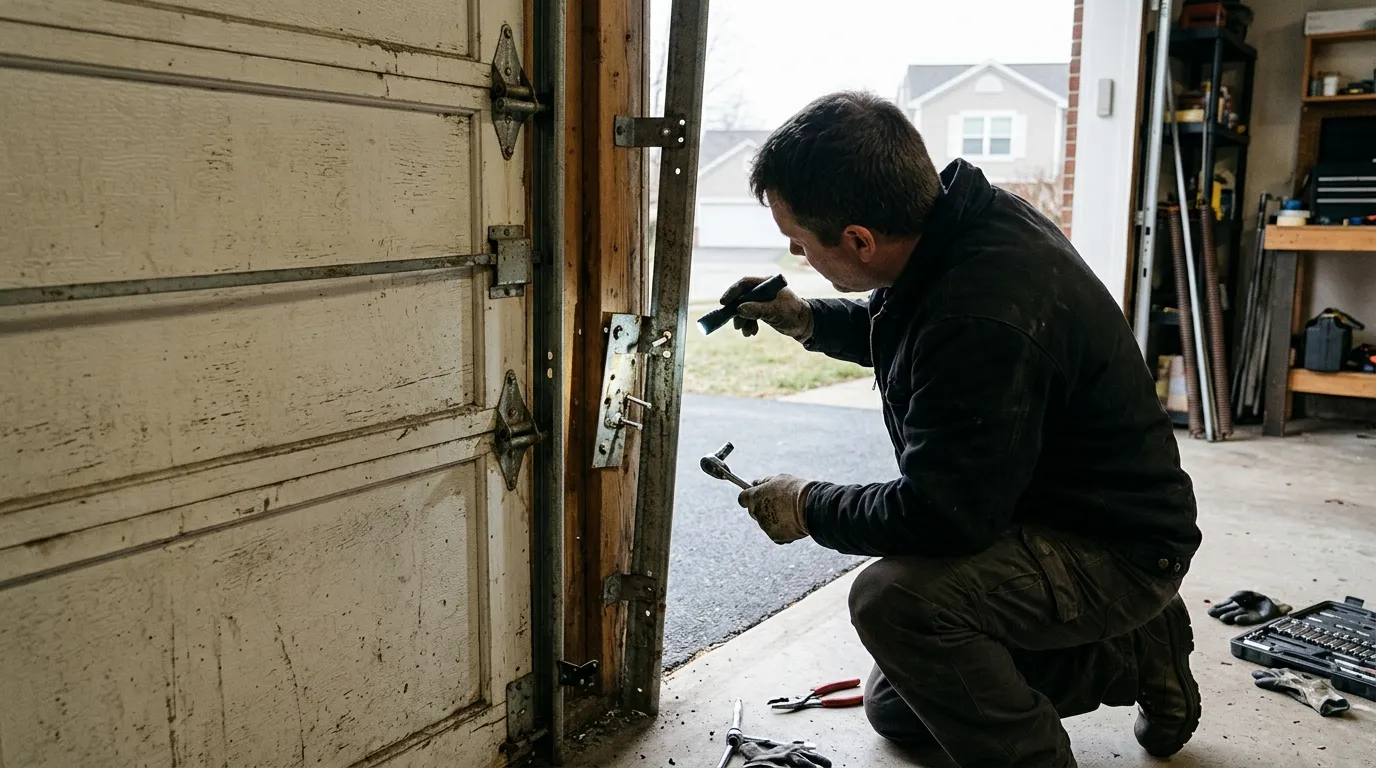
What we find
What to Check
Start with the bottom seal. On doors from the older end of our 1962-2005 range, the rubber gasket along the floor is often original or a low-cost swap from years back, and it hardens in cold weather until it stops sealing at all. Press a finger into it - if it doesn't spring back, it's done.
Next, check the panel itself for cold-weather insulation gaps, especially on houses built before insulation rules tightened up the garage envelope along with the rest of the house. A lot of doors in the 1980s stock that makes up most of this area were never insulated to begin with, so if yours is cold to the touch on the inside, that's original, not a defect.
Last, look at the torsion spring coils for gaps or rust streaks, and listen for the opener straining on the way up - both point to spring fatigue that cold weather accelerates. None of this needs tools, just a flashlight and five minutes before the next cold stretch.
How we work
What Is Going On
Put it together and the picture is pretty consistent: houses built in this area across four decades, mostly clustered in the 1980s and 90s, sitting in a cold moderate climate that punishes worn seals and tired springs every winter without ever throwing a single dramatic storm at you. That combination is why a door that looked fine in August can bind, sag, or snap a spring in January.
We won't tell you every door needs full replacement - plenty of the 1980s-90s doors just need a seal, a spring, and fresh hardware to run another decade. But a door on a house from the early end of that 1962 range, especially one that was never insulated, is usually past the point where patching makes financial sense. That's a judgment call we make door by door, not a rule that applies to every house on the list.
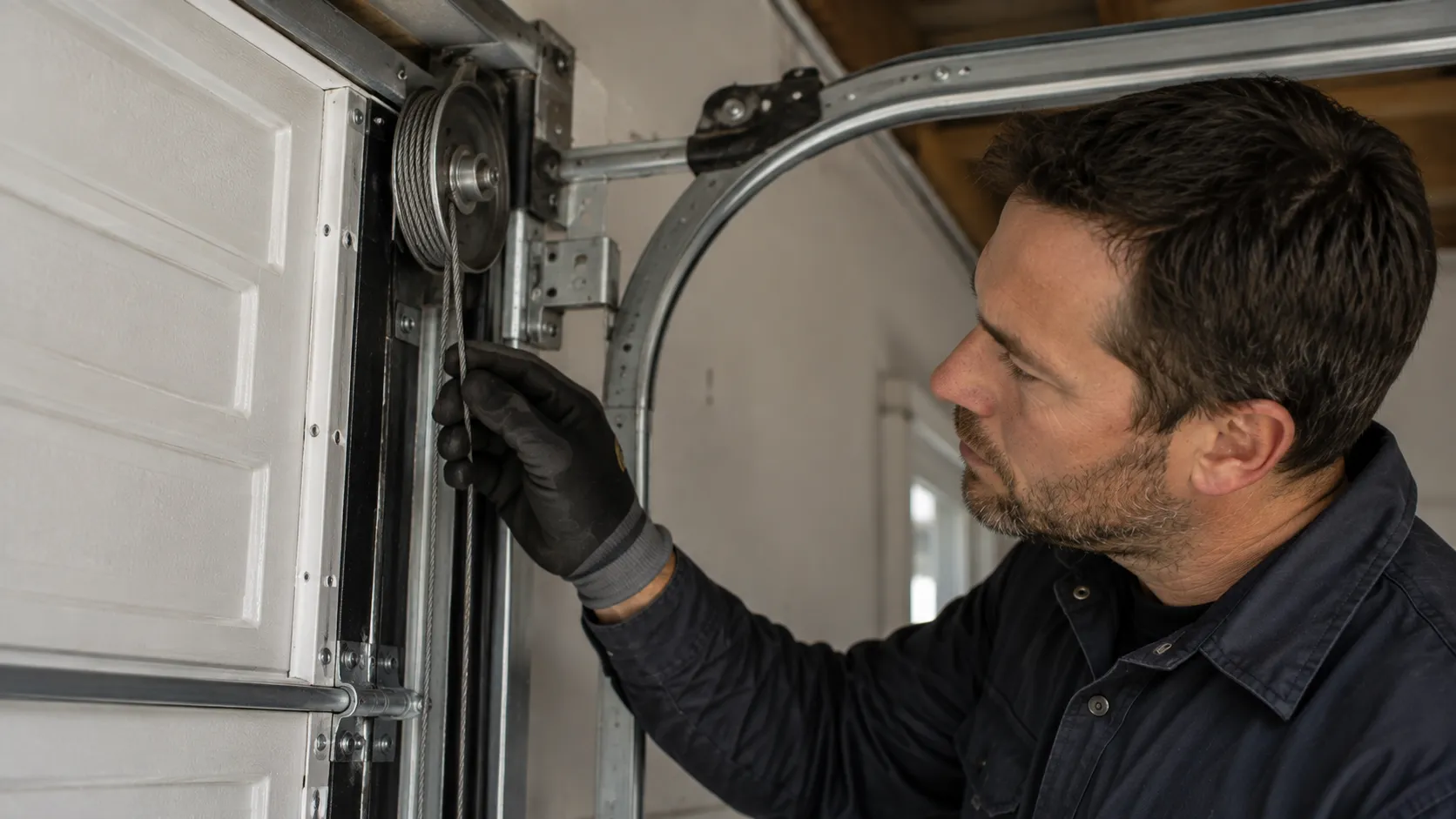
Questions
Common questions
Why is my garage so cold in winter if the rest of the house is fine?
Most homes in this area were built between 1962 and 2005, and garage insulation lagged behind the rest of the house for much of that window. A single-layer steel door with a hardened bottom seal lets cold straight through, even in a moderate climate, which is why the garage feels far colder than the living space.
Do I need a heavier spring because of the cold?
Not because of cold alone, but cold weather does accelerate wear on a spring that's already fatigued. On doors from the 1980s-90s stock common in this area, springs sized decades ago are often due regardless of season, and a cold snap is usually what finally breaks one.
Is my door's age normal for this area?
Yes. The housing here runs 1962 to 2005 with a median around 1983, so a door from that era is typical, not unusual. What matters more than the exact year is whether the seal, spring, and hardware have been maintained since.
Ready when you are
Need a garage door sorted in Issaquah?
Issaquah Garage Door Pros repairs and installs garage doors, springs and openers in Issaquah, WA and the surrounding area.