
Guide
What Power Cuts Do to an Older Issaquah Opener
In Issaquah, older openers from the 1980s and 90s stock often lack battery backup, and cold-season outages leave doors stuck. Here's what to check first.
Local detail
How Local Conditions Play In
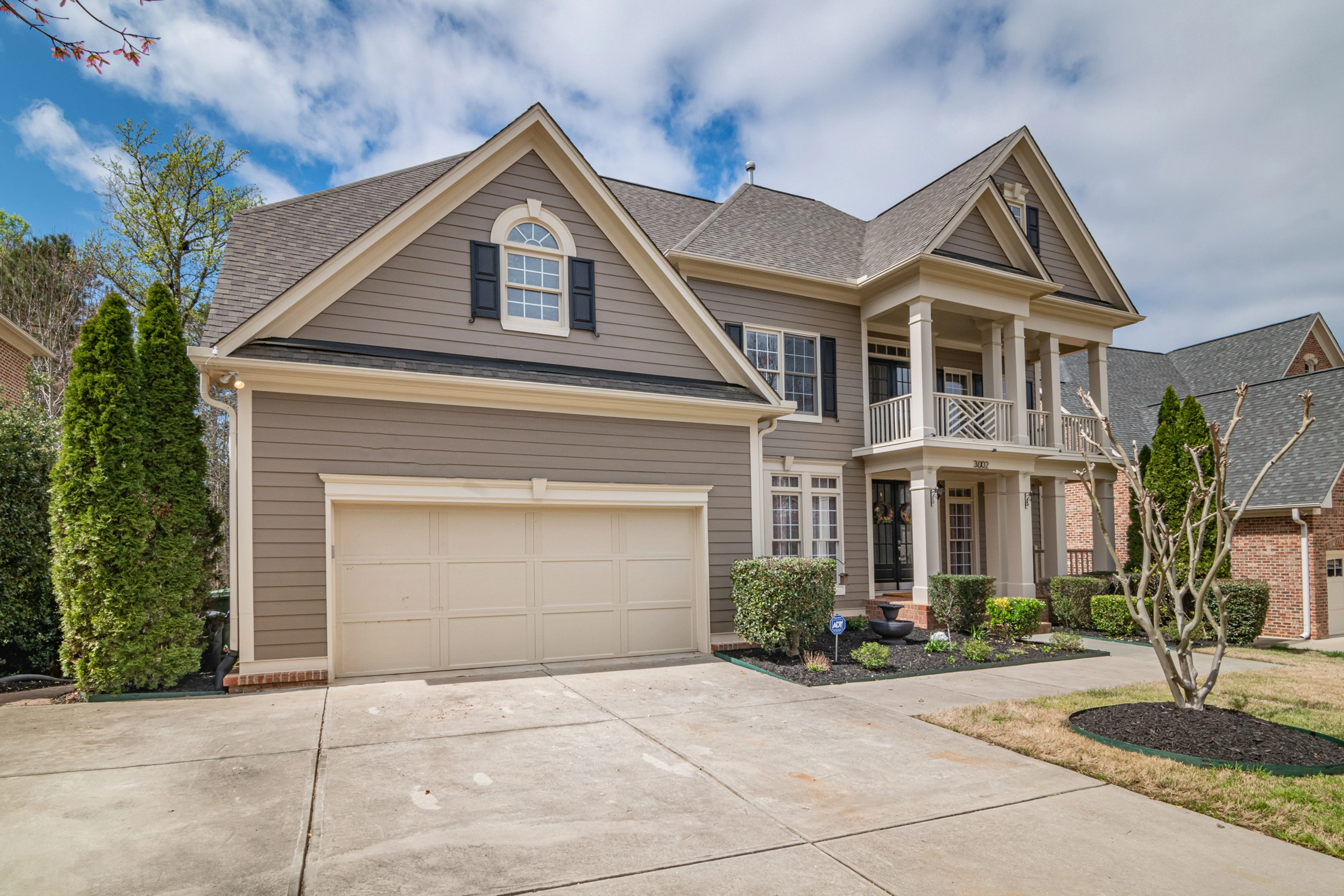
Most of the houses this side of Issaquah went up between 1962 and 2005, with the median build year landing around 1983. Across the 34 named areas that make up the service area - from Gilman and Olde Town to North Issaquah and Squak Mountain - the bulk of that stock is 1980s and 90s construction. That matters for openers because backup power wasn't a standard opener feature until well after most of these garages were framed.
A house built in 1983 got a chain-drive opener wired straight to house power, full stop. No battery, no way to trip the door open by hand if the breaker or the grid goes down, unless someone added a backup unit later. That's the setup we run into on most calls in this window: an opener that's original or close to it, on a circuit that was never meant to keep running through an outage.
The climate here sits in a cold-moderate band, and cold weather is exactly when the grid gets stressed and openers get tested. So the age of the house and the weather it sits in aren't separate problems - they show up together, usually on the same bad night.
The area
The Seasonal Bit
Cold-moderate winters are hard on anything electrical that sits in an unheated garage. Circuit boards on older openers don't like big temperature swings - they can read a signal wrong, stutter on the safety sensors, or just stop responding until things warm back up. Add a power interruption on top of that and you get a door that won't open by remote and won't respond to the wall button either, even after the power's back.
On houses from the 1962-2005 wave, a lot of that wiring wasn't run with any thought toward outages, because outages weren't part of the design conversation forty years ago. What we see every winter is the same pattern: cold snap, brief power blip, then a call about a door that's stuck down or stuck up. It's rarely the door itself.
It's the opener's control board or transformer taking a hit from the cold and the interruption at the same time. Knowing that ahead of the season is the difference between a two-minute manual release and a service call at 9pm in the dark.
What we find
What to Check
Before you call anyone, a few things you can check yourself:
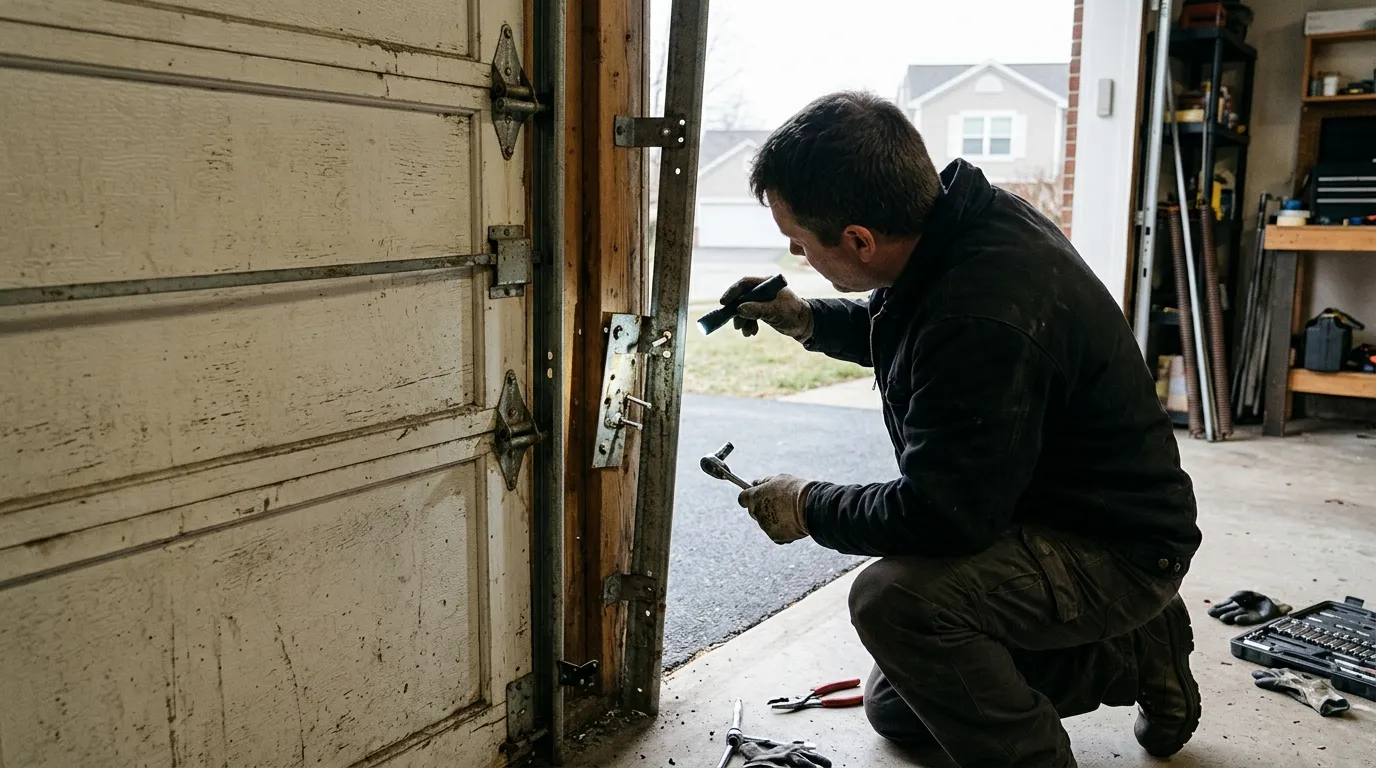
- **Manual release cord** - find the red cord hanging from the trolley and know how to pull it. On chain-drive units from the 1980s and 90s, this is your only way in during an outage. - **Battery backup unit** - check if one was ever added. Original openers from the 1962-2005 building wave didn't ship with one. - **Breaker panel** - a tripped breaker looks identical to a dead opener from the garage side. Rule it out first. - **Wall control wiring** - loose or corroded low-voltage wire at the wall button is common on wiring this age and can mimic a power problem. - **Opener age and model** - if you don't know how old it is, check the sticker inside the housing. That tells you whether backup power was even an option for that model.
None of this requires tools beyond a flashlight. If the door still won't move by hand after you've confirmed power is actually out and the release is pulled, that's a spring or track issue, not a power issue, and it's a different call.
How we work
What Is Going On
Here's the mechanism, plainly: an opener built for houses in this service area's 1962-2005 range runs on house current with no assumption that current might disappear. When it does - storm, utility work, a tripped main - the opener stops mid-cycle. If the door was partway up or down when power cut, it stays there until someone pulls the manual release. On chain and belt-drive units from the 1980s and 90s stock, that release mechanism is simple and mechanical, which is good news: it almost always still works even on an old unit, as long as it hasn't rusted solid.
What we can't do from a garage door call is fix the power problem itself. If breakers keep tripping or a circuit feels off, that's electrician work, not opener work, and we'll tell you that straight rather than poke at wiring we're not licensed to touch. Where we can help is the opener side: swapping in a unit with battery backup so outages stop meaning a stuck door, checking whether the existing unit is even worth keeping, or just walking you through the manual release so a bad night doesn't turn into a service call. In a cold-moderate climate with a lot of original-era openers still running in this service area, that backup swap is the one upgrade that actually changes the outcome next time the power drops.
Questions
Common questions
Why does my garage door opener stop working when the power goes out?
Most openers in this service area were installed in houses built between 1962 and 2005, when backup power wasn't a standard opener feature. They run straight off house current, so when the power cuts, the opener stops wherever it was in the cycle and won't respond until power returns or you use the manual release.
Is it normal for older Issaquah-area homes to lack battery backup openers?
Yes. Across the 34 named areas that make up this service area, most of the housing stock dates to the 1980s and 90s, before battery backup units became common. Unless a homeowner added one later, an opener original to a house this age almost certainly runs on house power only.
Can I open my garage door by hand during an outage?
Usually, yes. Look for the red cord hanging from the trolley on the opener rail and pull it straight down. This disengages the opener from the door so you can lift it manually. It works on nearly all chain and belt-drive units from the 1980s and 90s, even old ones, unless the mechanism has rusted.
Does cold weather make garage door power problems worse?
Yes. This area sits in a cold-moderate climate band, and cold snaps are when the grid is most likely to blip and when opener circuit boards are most likely to misread a signal or stall. The two often happen together, which is why outage-related opener calls cluster in winter.
Ready when you are
Need a garage door sorted in Issaquah?
Issaquah Garage Door Pros repairs and installs garage doors, springs and openers in Issaquah, WA and the surrounding area.