
Roller binding hesitation
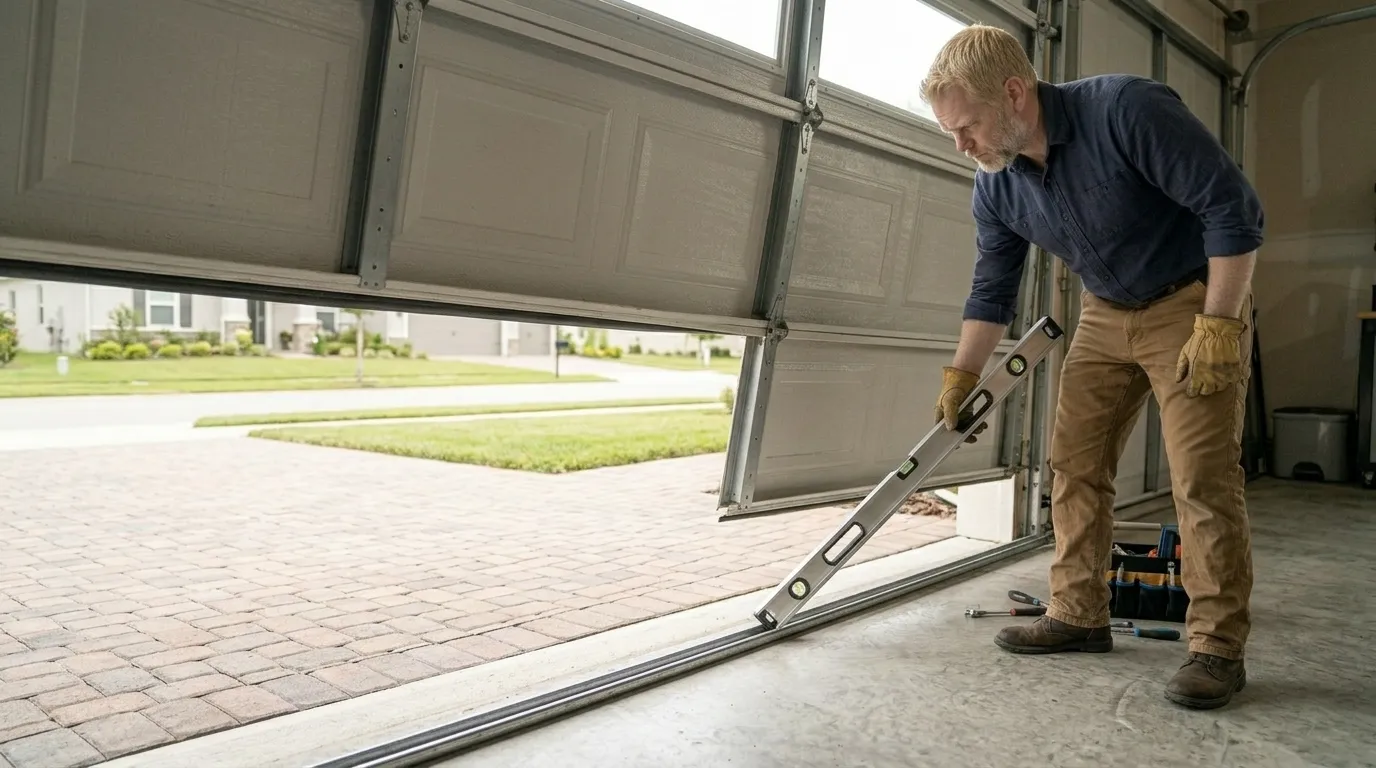
A second version: the door jerks or hesitates at one point instead of moving smooth, because a roller has worn down enough that it's binding rather than rolling.
Issaquah, WA
Rollers wear out fast on Issaquah's 1980s-era doors thanks to cold, damp winters. We stock steel and nylon rollers and explain what the fix actually involves.
Local causes
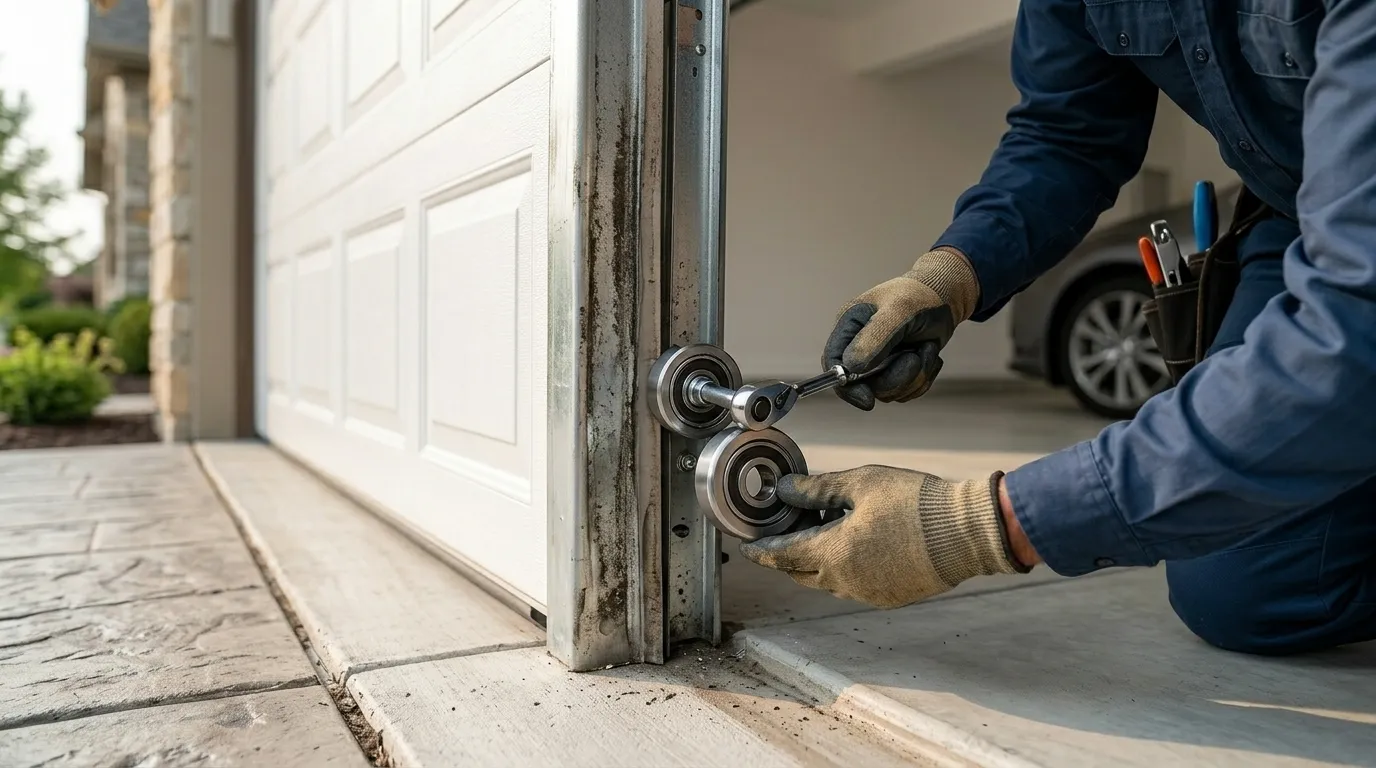
Most of the housing stock we work on across this service area went up between 1962 and 2005, with the bulk of it - the 34 named neighborhoods we cover, from North Issaquah to Cottage Lake - built in the 1980s and 90s. That matters for rollers specifically. Doors from that era almost always shipped with steel rollers on steel track, no nylon, no sealed bearings. Thirty-plus years of use wears the roller stem and the track lip unevenly, and once the roller starts to flat-spot, every cycle of the door gets louder and rougher.
The climate band here is cold and moderate, not desert-dry. That combination of freeze-thaw swings and damp winters is hard on unsealed steel rollers - moisture gets into the stem, rust sets in where the roller meets the bracket, and the roller stops turning freely. It starts dragging instead of rolling. You feel that drag as resistance on the opener, and eventually the opener strains hard enough to strip a gear or the roller itself snaps off mid-track. This is a wear pattern tied directly to the age of the stock in this area, not a one-off defect.
Symptoms
The most common complaint we hear is grinding or squealing on the way up or down, usually loudest at the same spot in the travel every time - that's the flat-spotted roller hitting the same section of track on every cycle.
A second version: the door jerks or hesitates at one point instead of moving smooth, because a roller has worn down enough that it's binding rather than rolling.
If you see a roller has actually come off the stem, or the wheel part is cracked and the metal stem is riding bare against the track, that's a roller that's failed completely, not just worn. At that point the door can bind hard enough to strip the track bracket if you keep running the opener.
Worn rollers on one side of the door also tend to pull the door slightly off-square in the opening, which shows up as a gap that's uneven side to side when the door is closed. None of this fixes itself, and running the opener against a stuck roller is the fastest way to turn a $20 part into a bent track.
On the truck
We stock steel rollers, the type most original to homes in this area's 1980s-90s stock, and nylon rollers, which run quieter and don't need the periodic lubrication steel rollers do.
Nylon costs more per roller but holds up better against the freeze-thaw cycling that's typical of a cold, moderate climate band like this one - the sealed bearing keeps moisture out of the stem in a way an open steel roller can't match.
We carry standard 7-ball and 10-ball stem lengths to match older track spacing, since houses built before the newer building codes sometimes used a different bracket depth than what ships standard today.
One honest limitation: if your door needs a roller size or stem length we don't carry on the truck, we order it rather than force a part that doesn't fit - that can mean a short wait rather than a same-visit fix, and we'll tell you that up front instead of jamming in the wrong stem.
The repair
A full roller replacement means pulling the old rollers out of the track one at a time, usually starting from the bottom bracket up, checking each hinge and bracket for wear as we go since a bent hinge will chew through a new roller just as fast as the old one.
We check the track itself for dents or narrowing at the spot where the worn roller was dragging - on a door that's been grinding for months, the track sometimes needs a light straightening pass or a bracket reset, not just new rollers.
We replace rollers on both sides even if only one side is loud, because a fresh roller riding against a worn track on the same side will wear at a different rate than the other side, and that mismatch is what causes doors to run crooked again within a year.
On a double door this typically means eight to ten rollers total, more if the door has an odd bracket configuration. This isn't a job that needs a new opener or new springs alongside it - rollers are a track-and-hardware fix, and we don't upsell parts the door doesn't need.
Questions
If your house was built in the 1980s or 90s, which covers most of this area's stock, it likely has original steel rollers on steel track. Combined with a cold, damp climate band, steel rollers rust and flat-spot faster than sealed nylon ones. That's a hardware-age issue, not a sign anything else is wrong with the door.
You can, but we generally replace rollers on both sides of the door even if only one side is loud. A new roller running against a worn track opposite an old, worn roller wears unevenly and tends to pull the door crooked again within a year.
Yes - we stock steel and nylon rollers in standard 7-ball and 10-ball stem lengths to match the older bracket spacing common in this area's 1980s-90s housing. If your door needs a size we don't carry on the truck, we order it rather than force a mismatched part.
Often, yes, if the crookedness is from uneven roller wear pulling the door off-square in the track. We check hinges and track condition during the job, since a bent hinge or narrowed track section will wear a new roller just as fast as the old one did.
Explore more
Ready when you are
Issaquah Garage Door Pros repairs and installs garage doors, springs and openers in Issaquah, WA and the surrounding area.