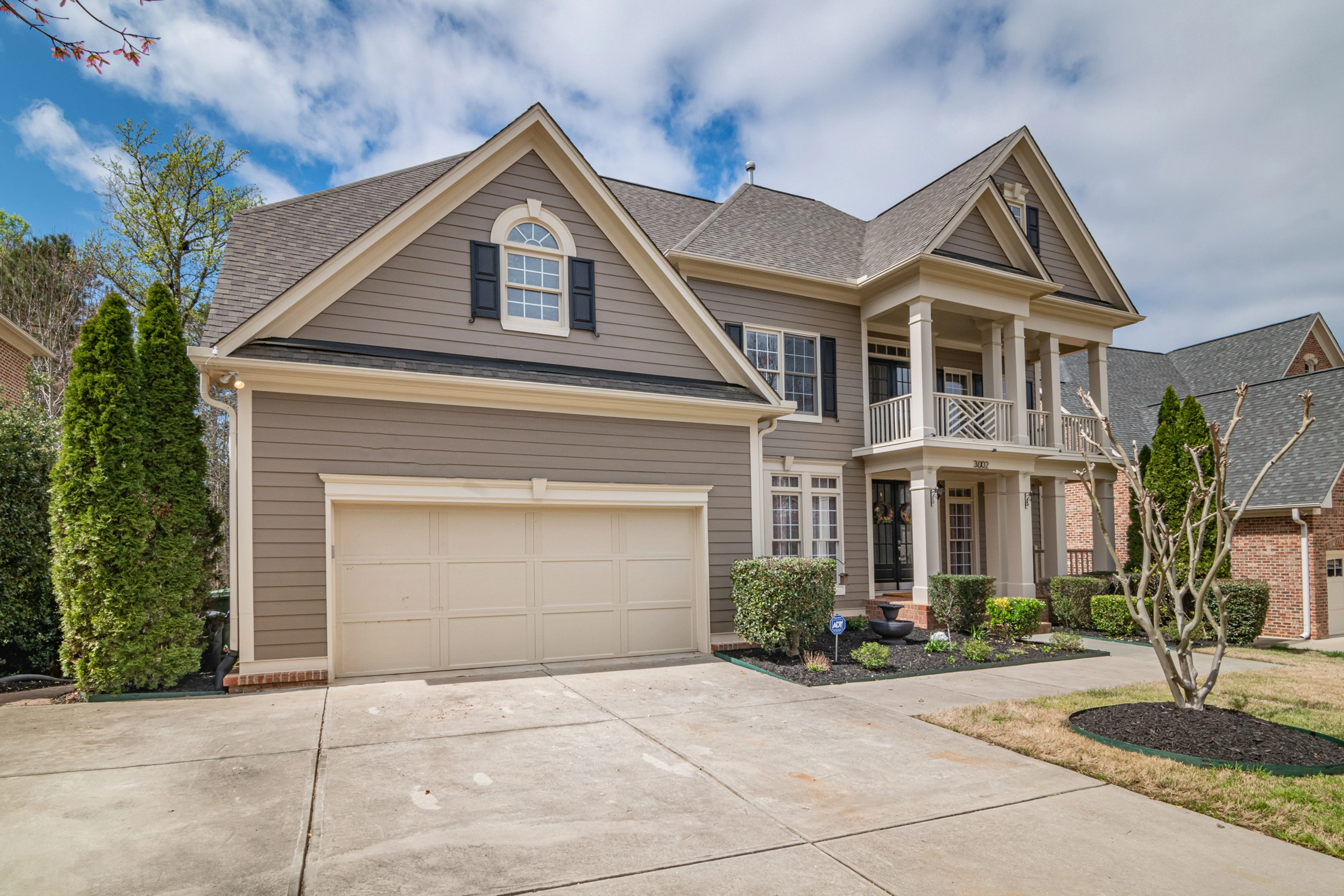
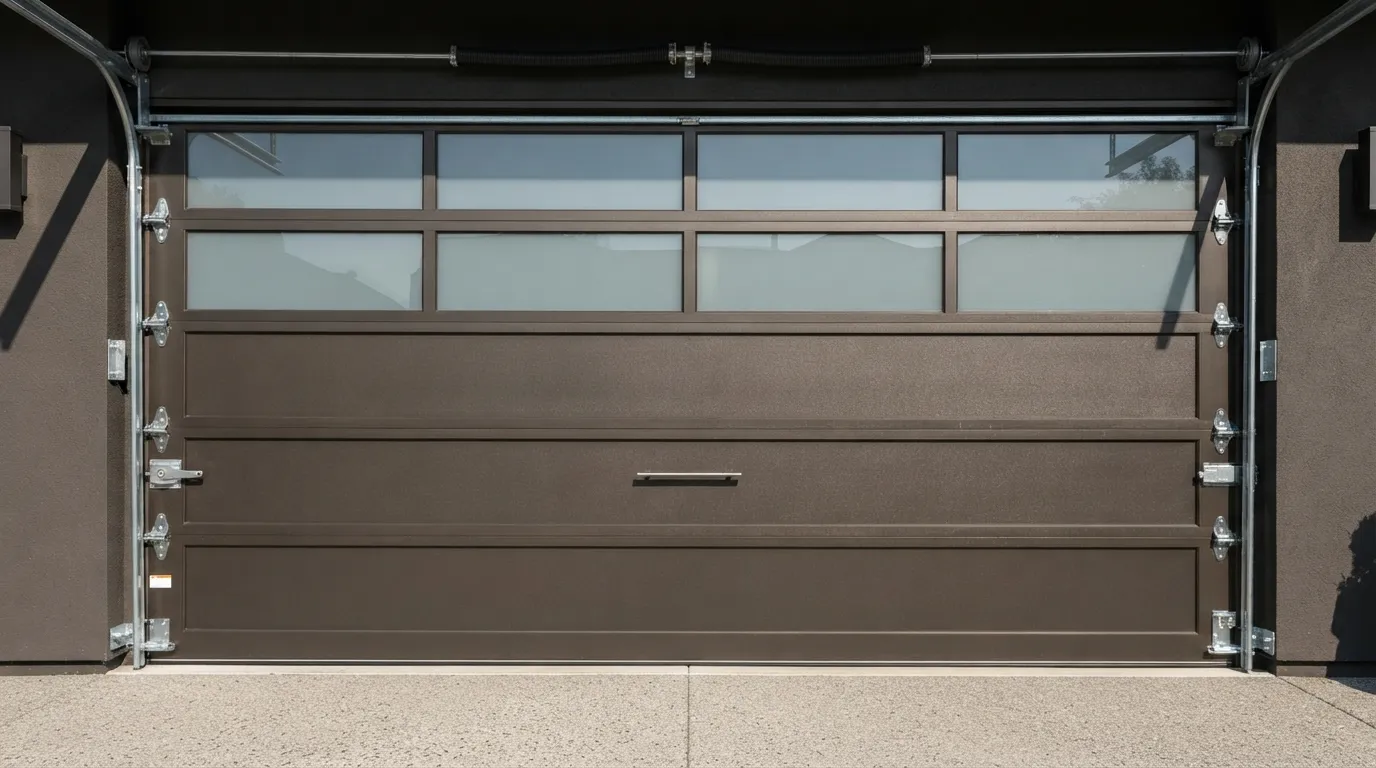
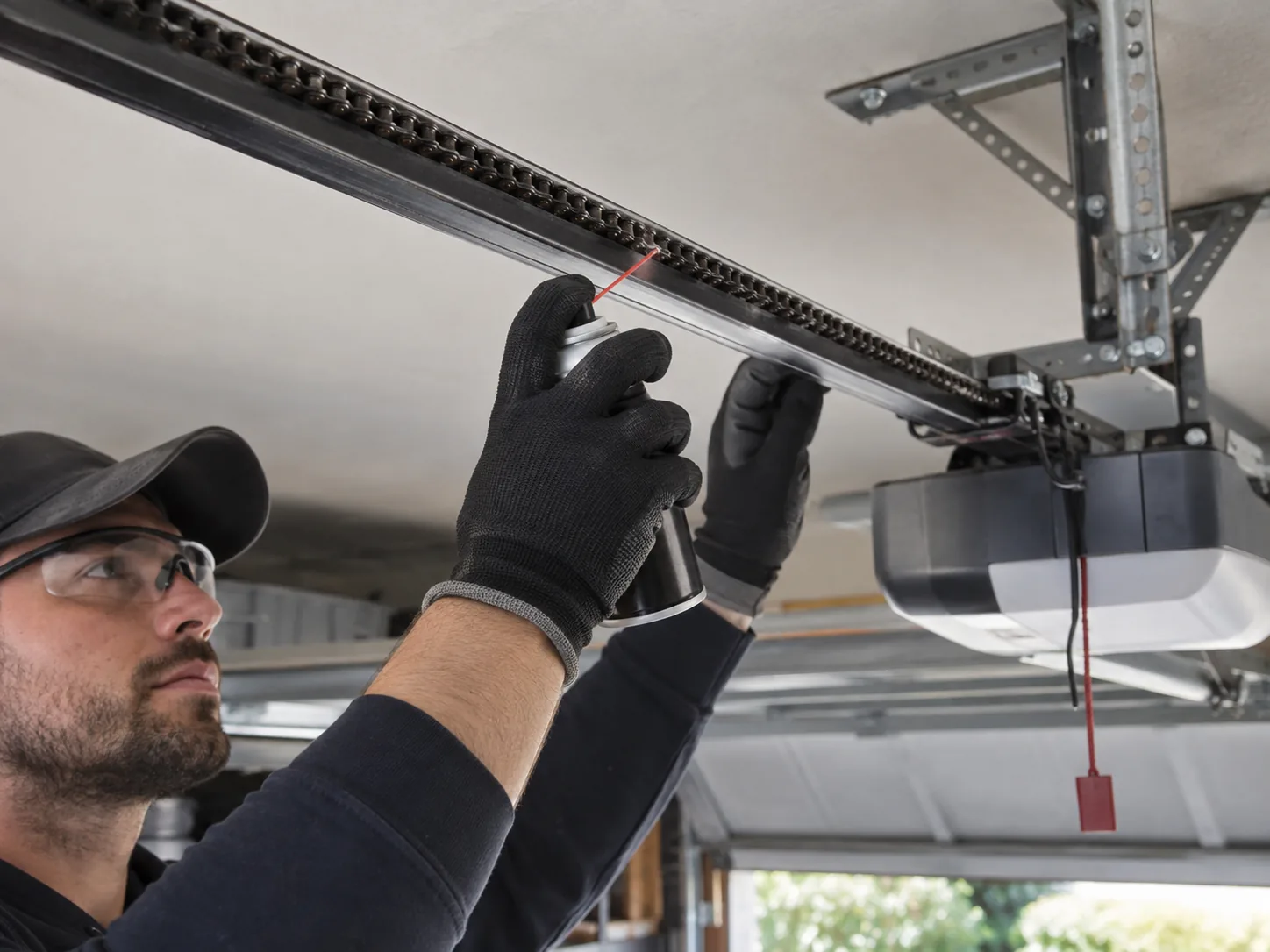
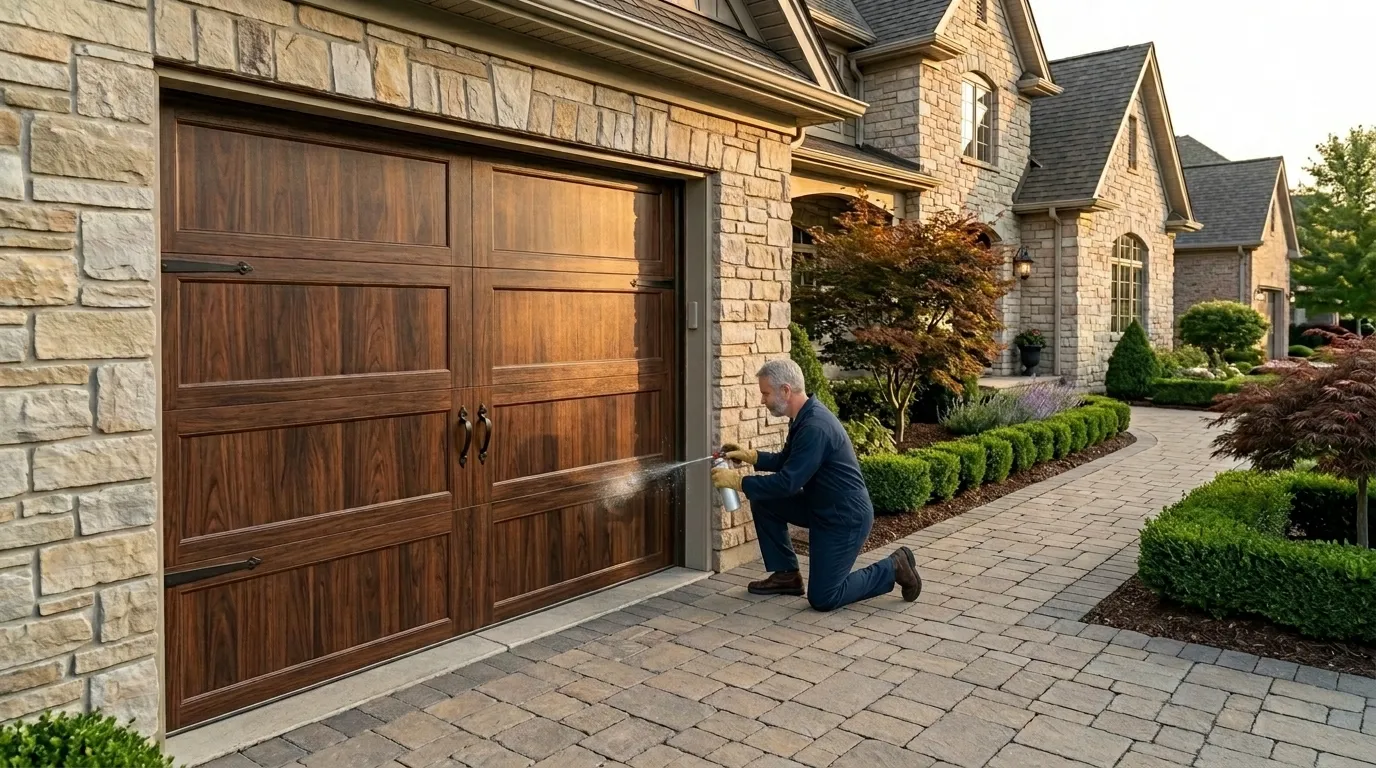
Most of the housing stock we work on around here went up between 1962 and 2005, with the median build year sitting at 1983. That means a lot of garages still carry the steel and wood-composite doors that were standard through the 1980s and 90s, before manufacturers thickened the gauge or added better rot resistance. Those panels weren't built for decades of freeze-thaw cycling in a cold, moderate climate like this one.
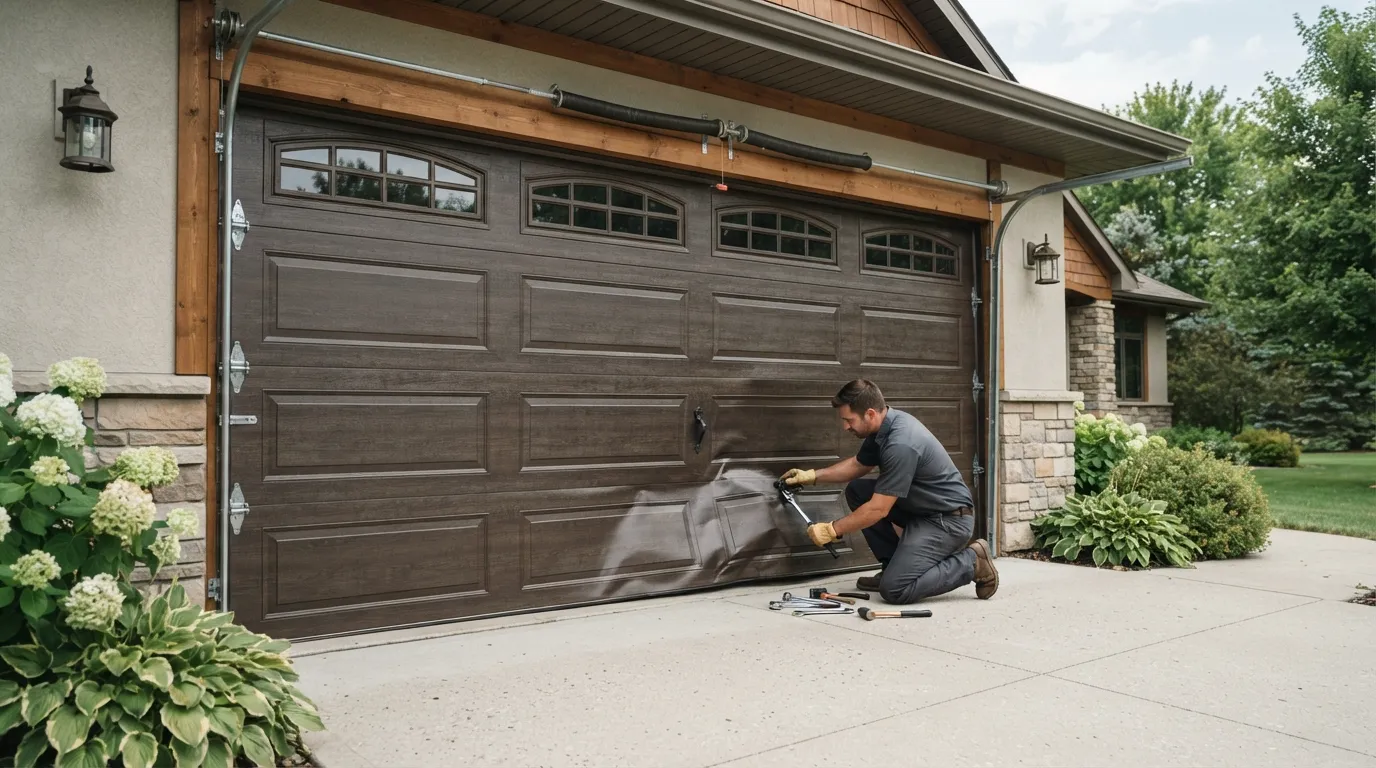
Winter here isn't brutal, but it's damp and it swings across freezing more than people expect. Wood-composite bottom panels from that era soak up moisture at the seams and swell, then dry and crack when the sun comes back out. Steel panels from the same period are thinner-gauge than what's sold today, so they dent easily and rust starts at the bolt holes and weep-hole edges long before the rest of the door looks tired.
Across the roughly 88,031 owner-occupied houses in this service area, that 1980s-90s stock is the dominant type in the 34 named communities we cover, not the exception. A cracked or rusted panel on a door that age usually isn't a one-off accident. It's the door telling you its age.